Matcha wins for calm, steady morning energy, and the reason is simple: it delivers caffeine alongside L-theanine, an amino acid that tends to smooth out the edgy, wired feeling many people get from coffee. If you’re someone who gets jittery, anxious, or hits a wall by 10:30, matcha is worth a serious try. If you love the ritual, the flavor, and the quick kick of a strong cup, coffee still earns its place.
Here’s the fair picture. A cup of coffee usually carries more caffeine than a serving of matcha, so it hits harder and faster. Matcha’s lower dose, paired with L-theanine, tends to feel gentler and more even for many people. Individual response varies a lot, though. Sleep, body weight, how fast you metabolize caffeine, and what you eat with it all change the outcome.
Below, you’ll find a side-by-side table, a plain-language look at what each drink actually is, a comparison of energy, focus, digestion, and sleep, and practical guidance on who should pick which. Most people don’t need to quit coffee entirely. They just need to know which cup fits which kind of morning.
Matcha vs. Coffee at a Glance: The Quick Comparison
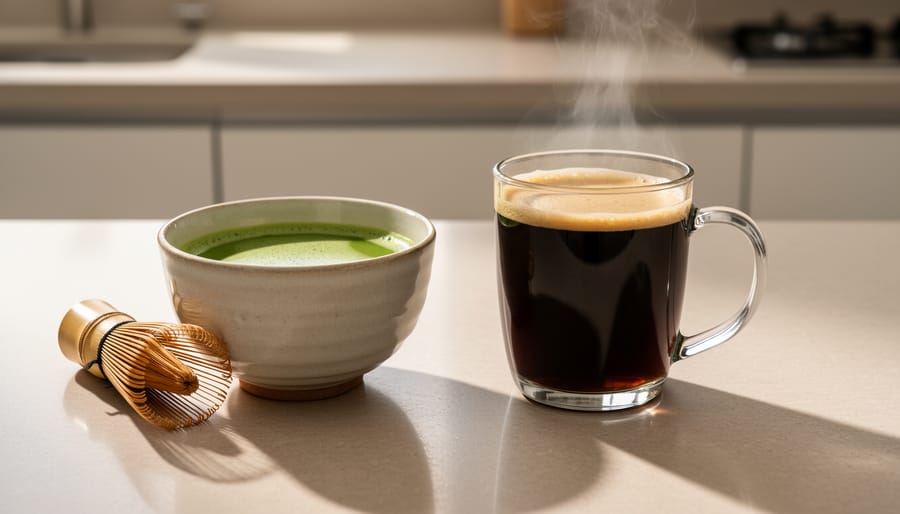
If you want the quick version, this table shows how a typical cup of matcha stacks up against a typical cup of brewed coffee. Keep in mind that caffeine amounts vary by brand, brew method, and serving size, so treat these ranges as ballparks rather than exact numbers.
Factor
Matcha Powder
Brewed Coffee
Typical caffeine per serving
About 35-70 mg (1 tsp, roughly 2 g)
About 80-150 mg (8 oz cup)
Feel of the energy
Calm, steady alertness
Sharper, more noticeable jolt
Onset and duration
Builds gradually, lasts several hours
Hits fast, may fade sooner
Key compounds
Caffeine, L-theanine, catechins
Caffeine, chlorogenic acids
Stomach comfort
Often gentler, lower acidity
Can irritate sensitive stomachs
Taste and preparation
Grassy, slightly sweet; whisk powder into hot water
Bold, bitter, roasted; brew with a machine or pour-over
The pattern is simple. Coffee usually packs more caffeine and delivers it quickly, which is great when you need a fast push. Matcha tends to deliver less caffeine more slowly, and many people find that translates to fewer jitters and a gentler landing.
Your own experience may differ, and that’s normal. If you’d like to test the difference yourself, you can find matcha powder in Canada from a range of sellers, so you can try a small amount and see how your body responds before making any permanent switch.
What Matcha Powder and Coffee Actually Are
Matcha: Whole Green Tea Leaf in Powder Form
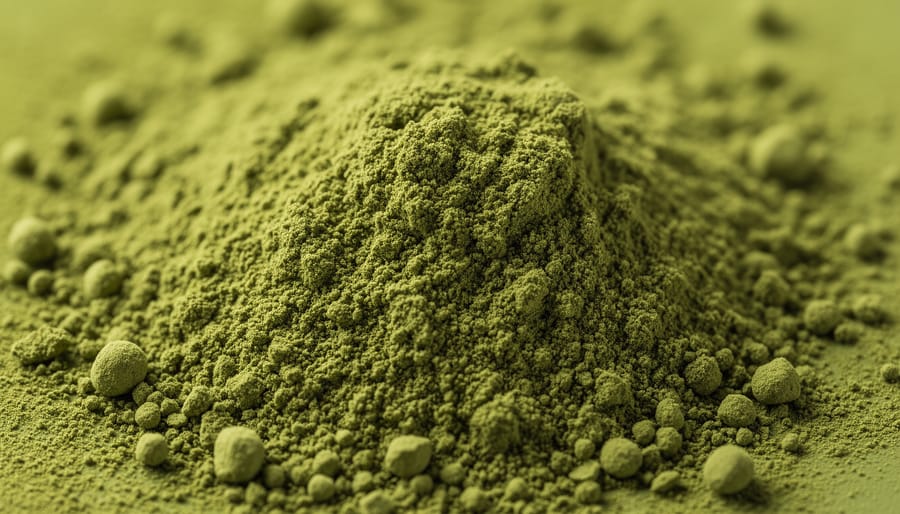
Matcha starts as green tea (Camellia sinensis), the same plant behind regular green and black tea. About three to four weeks before harvest, growers shade the plants, which boosts chlorophyll and amino acids and gives matcha its vivid green color and mellow, slightly sweet flavor. The best young leaves are then picked, steamed, dried, and stone-ground into a fine powder.
Here’s the key difference from a regular tea bag: you whisk the powder into water and drink the leaf itself, rather than steeping it and tossing it out. That means you take in everything the leaf holds, including its caffeine and L-theanine.
You’ll mostly see two grades. Ceremonial grade is made from the youngest leaves and tastes smoother, so it suits drinking straight with water. Culinary grade is a bit more bitter and works well in lattes, smoothies, and baking.
Coffee: The Familiar Morning Brew
Coffee is a drink brewed from roasted coffee beans, which are actually the seeds of the coffee plant. Roasting develops the flavor, and brewing pulls out the caffeine and other compounds along with it.
How you brew matters more than most people expect. A shot of espresso is small but concentrated, while a mug of drip coffee usually contains more total caffeine simply because there’s more of it. Cold brew steeps for hours and can run strong, too. Bean type, grind size, and cup size all nudge the number up or down.
So why is it everyone’s default? It’s familiar, widely available, inexpensive, and tied to a comforting routine. For many people, the smell and warmth of that first cup are half the appeal.
Why Matcha May Feel Smoother: How the Energy Differs
Caffeine Content and How Fast It Hits
A typical cup of brewed coffee (about 8 ounces) contains roughly 80 to 100 milligrams of caffeine, though a large café order can easily double that. A serving of matcha, usually half a teaspoon to one teaspoon of powder, generally lands between 30 and 70 milligrams, depending on the grade and how much you whisk in.
Speed differs too. Coffee’s caffeine tends to be absorbed quickly, so many people feel it within 15 to 45 minutes. Matcha’s lift often builds more gradually, though individual response varies.
Still, the drink name tells you less than the serving size. A heaping scoop of matcha can rival a small coffee, and a short espresso can fall below a strong matcha. Check your actual amounts before comparing.
L-Theanine, Focus, and the Crash Question
L-theanine is an amino acid found naturally in tea leaves, and matcha has a fair amount of it because the plants are shaded before harvest. In simple terms, it’s linked to a relaxed but alert state of mind. Small studies suggest that taking it alongside caffeine may improve focus and reduce the edgy, wired feeling some people get from caffeine alone.
That may explain why plenty of people say matcha feels calmer than coffee at a similar caffeine dose. Some also notice fewer jitters and less of a sharp drop mid-morning or afternoon.
Still, the evidence is early, and the research is mostly short-term. Sleep, food, and your own caffeine sensitivity matter just as much. Treat the smoother-energy idea as promising, not guaranteed.
Beyond Energy: Digestion, Antioxidants, Sleep, and Cost
Energy isn’t the only thing that decides what ends up in your mug. A few practical factors tend to tip the scale over weeks and months:
- Stomach comfort: coffee is more acidic and can trigger reflux in some people, while matcha is often gentler, though a strong dose on an empty stomach can still cause nausea.
- Antioxidants: matcha is rich in catechins, while coffee provides chlorogenic acids, and both are linked to health benefits in research.
- Sleep impact: caffeine from either drink can delay sleep, so timing matters as much as the choice.
- Cost per serving: a daily cup of quality matcha usually costs noticeably more than home-brewed coffee.
- Prep time: coffee can be quicker with a machine, while matcha needs whisking.
- Sourcing quality: matcha varies widely in purity and origin, so reputable sellers matter.
On digestion, individual response varies. If coffee leaves your stomach unsettled, matcha may feel easier, but that isn’t guaranteed. If you make matcha lattes, remember that dairy can be a trigger for some people, so those dealing with lactose intolerance may prefer a plant-based milk.
Sleep is where both drinks behave similarly. Caffeine lingers for hours, so a late-afternoon cup of either can cut into rest. If you’re working on sleep support keep your last caffeinated drink earlier in the day.
Quality is the main sourcing concern with matcha. Because you consume the whole leaf, what’s in the powder ends up in your cup. Choose products from reputable sellers who share where the tea was grown and tested. The same careful approach applies to buying supplements: check labels, origins, and third-party testing before you commit.
Real-Life Mornings: How People Make the Switch (or Don’t)
Picture a desk worker who starts the day with a large coffee at 8 a.m. and feels foggy by 10:30. She swaps one cup for matcha three mornings a week and notices her energy tapers off more slowly. Not magic, just a different pattern for her.
Now take someone who’s sensitive to caffeine. Coffee gives him a racing heart and restless hands. He tries a small serving of matcha and finds the lift quieter. For him, the smaller, gentler dose matters as much as the drink itself.
Then there’s the coffee lover who adores the smell and the ritual. She doesn’t want to quit, so she keeps her Saturday espresso and uses matcha on busy weekdays.
If you want to try it yourself, a few simple steps help:
– Start small. Use about half a teaspoon (roughly 1 gram) of matcha and see how you feel before increasing.
– Keep prep easy. Whisk the powder into a little hot (not boiling) water, then add more water or warm milk. A small whisk or a handheld frother works fine.
– Eat something first. Pairing matcha with breakfast, like oatmeal or eggs, can be easier on an empty stomach.
– Go hybrid. Alternate days or swap just one cup. You don’t have to choose a side.
Give each change a week or two before judging it.
Who Should Choose Matcha, Who Should Stick With Coffee
Matcha tends to suit people who want calmer, steadier focus. If coffee leaves you jittery, wired, or with a sour stomach, the lower acidity and slower-building lift of matcha may feel kinder. It also fits anyone who prefers a gradual lift over a sudden spike, especially if mornings are spent at a desk where you need to concentrate for hours.
Coffee still makes more sense if you want a stronger, faster boost. If you love the taste, the aroma, and the ritual of brewing a cup, there’s no health reason to give that up. It’s also the easier choice on a tight budget, since a cup of coffee usually costs far less than a serving of good matcha.
Some people should slow down before choosing either one. If you’re pregnant, have a heart condition, take regular medication, or deal with anxiety, talk with your healthcare provider first. The link between caffeine and anxiety is well worth understanding, since both drinks contain caffeine and can affect how you feel.
Daily limits apply to both. Most health authorities suggest keeping total caffeine to about 400 milligrams a day for healthy adults, and less if you’re pregnant. Count every cup, whichever drink it comes from.
Matcha vs. Coffee: Common Questions Answered
Does matcha have less caffeine than coffee?
Usually, yes, per typical serving. A cup of matcha generally contains less caffeine than a standard cup of brewed coffee, but amounts vary by brand, how much powder you use, and how the coffee is brewed. A heaping scoop of matcha can close the gap quickly.
Can matcha really prevent the crash?
It can’t promise to. Many people report a gentler lift and less of a drop with matcha, possibly thanks to its L-theanine, but research is still early and everyone responds differently. Pairing either drink with breakfast helps steady your energy.
Can I drink matcha on an empty stomach?
Some people can, but matcha can upset a sensitive stomach when there’s no food to cushion it. If you feel queasy, try having it with or after a small breakfast.
Can I combine matcha and coffee?
You can, as long as your total caffeine stays within your own comfortable limit. Many people simply alternate, choosing matcha on some mornings and coffee on others, rather than stacking both in one sitting.
How much matcha is too much comes down to your total daily caffeine, not the powder itself. Most health authorities suggest keeping caffeine to about 400 mg a day for healthy adults, and that count includes every coffee, tea, and energy drink. If you’re sensitive to caffeine, start with a half scoop and see how you feel before building up. If you’re pregnant, have anxiety, a heart condition, or take medication, check with your healthcare provider first.
So, which one wins your morning? For many people, matcha delivers a gentler, steadier lift, while coffee gives you speed and strength when you need to get moving fast. Neither is the “right” answer for everyone. Your caffeine sensitivity, stomach comfort, budget, and the ritual you actually enjoy all matter just as much as the numbers on a comparison table.
The simplest way to find out is to run your own small experiment. Pick one option and stick with it for a week or two, keeping the serving size consistent. Jot down a few notes each day: how quickly you felt it, how focused you were around 10 a.m., whether jitters or a slump showed up, and how you slept that night. Then swap and compare.
If you’re pregnant, managing anxiety, living with a heart condition, or taking medication, check in with your healthcare provider before changing your caffeine habits. Your best morning drink is the one that leaves you feeling steady, not stressed.