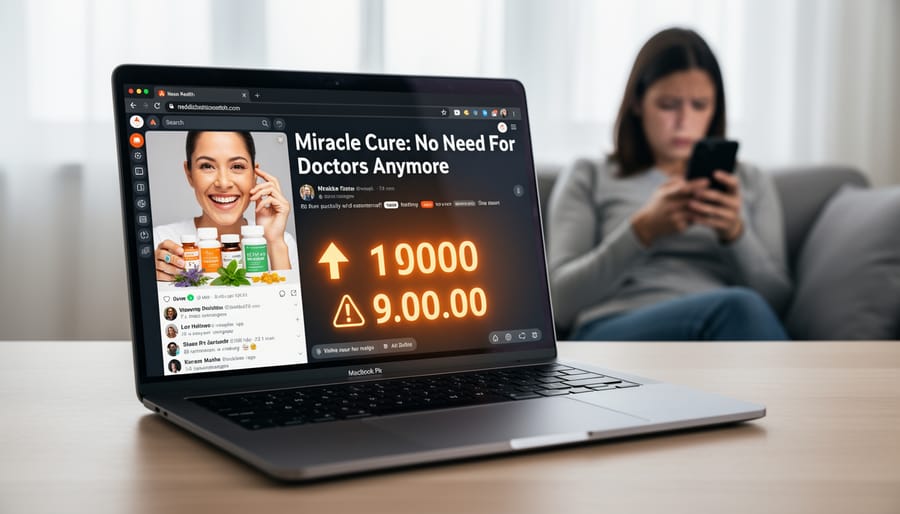
Scroll past health advice with suspiciously high upvotes and ask yourself: could this recommendation be artificially promoted? The practice of buying reddit upvotes has infiltrated health communities, turning what should be peer-validated wisdom into purchased influence. When someone pays to boost their post about miracle supplements, unproven treatments, or dangerous health hacks, they’re not just gaming the system—they’re potentially putting your wellbeing at risk.
Health-conscious individuals increasingly turn to Reddit for real-world experiences and honest advice that cuts through corporate marketing. The platform’s voting system was designed to surface the most valuable contributions, making it particularly attractive for those seeking authentic health guidance. But this democratic approach has a vulnerability: votes can be bought, and with them, credibility can be manufactured.
The consequences extend beyond mere misinformation. When manipulated posts gain traction, they crowd out legitimate advice from medical professionals and experienced community members. A boosted post promoting an ineffective treatment might delay someone from seeking proper medical care. Meanwhile, genuinely helpful health discussions get buried under artificially amplified content.
Understanding this manipulation isn’t about becoming paranoid—it’s about becoming informed. Recognizing the signs of vote manipulation, knowing which health subreddits maintain stronger moderation, and learning to verify information through credible sources will help you navigate Reddit’s health communities confidently. Your health decisions deserve information you can trust, not content that simply paid for visibility.
How Bought Upvotes Game Reddit’s Health Communities
The Business Behind Fake Engagement
The marketplace for Reddit upvotes operates surprisingly openly, with dozens of websites and service providers advertising their offerings through simple Google searches. These services typically charge between $50 to $200 for packages ranging from 50 to 500 upvotes, with bulk discounts available for larger campaigns. The transaction is straightforward: clients provide the Reddit post URL, select their desired upvote count, and payment processes through cryptocurrency or standard payment platforms.
Behind these purchases are three main players profiting from artificial engagement. Supplement companies frequently use upvote services to boost testimonials about their products, pushing unverified claims about fat-burning pills or muscle-building powders to Reddit’s front page. Alternative health promoters leverage fake engagement to amplify controversial treatments that lack scientific backing, from extreme detox protocols to unproven cancer therapies. Misleading wellness brands round out the major buyers, promoting expensive programs or products that promise miracle transformations.
The motivation is simple economics. A Reddit post with 500 upvotes can generate thousands of clicks, translating directly into product sales. One supplement company representative, speaking anonymously to consumer protection investigators, admitted their firm spent $2,000 monthly on Reddit manipulation because it generated approximately $15,000 in revenue from customers who believed the upvoted advice represented genuine community consensus.
These services damage more than just Reddit’s integrity. When someone researching health solutions encounters artificially promoted content, they’re seeing advertising disguised as peer recommendation, making truly dangerous health advice appear trustworthy and community-vetted when it’s neither.
Which Health Topics Get Manipulated Most
Certain health topics attract vote manipulation far more than others, primarily because they tap into people’s vulnerabilities and desires for quick solutions. Weight loss products and programs consistently rank among the most manipulated topics, with promoters artificially boosting posts about trendy diets, fat-burning supplements, and miracle transformation stories. These posts prey on the emotional aspects of body image concerns.
Alternative medicine and supplements represent another heavily targeted area, where buying supplements recommendations often get artificially promoted without proper scientific backing. Unverified claims about CBD oil, collagen, detox teas, and vitamin megadoses frequently receive coordinated upvotes to appear credible.
Mental health treatments also face significant manipulation, particularly posts promoting unregulated therapies, apps, or coaching services. Since mental health discussions involve sensitive, personal experiences, manipulated posts can easily blend with genuine community support.
Chronic condition remedies for issues like arthritis, diabetes, and autoimmune diseases are equally vulnerable. People desperate for relief often encounter upvoted posts promoting expensive protocols or unproven treatments. Dr. Sarah Martinez, a digital health researcher, notes that manipulators specifically target conditions where conventional medicine offers management rather than cures, making sufferers more receptive to alternative claims.
The Real-World Damage to Your Health Choices

When Bad Advice Looks Popular
The consequences of manipulated upvotes on health forums aren’t just theoretical—they’ve caused real harm to real people. When bad advice gets artificially boosted to the top of discussion threads, unsuspecting readers mistake popularity for credibility.
Take the detox tea trend that swept through several health subreddits. Posts promoting specific brands received thousands of upvotes, making them appear community-endorsed. Users reported severe dehydration, electrolyte imbalances, and dependency on laxatives after following this seemingly popular advice. Investigation later revealed that many top posts came from accounts linked to the tea companies themselves.
Similarly, dangerous supplement combinations have gained traction through vote manipulation. One highly upvoted post recommended mixing specific herbs for anxiety relief—a combination that actually increased risk of liver damage when taken together. Several users experienced adverse reactions before medical professionals intervened in the thread.
Perhaps most disturbing are cases involving cancer treatment alternatives. Posts claiming miracle cures through unproven protocols have received artificial boosts, appearing alongside legitimate weight loss advice and wellness tips. Dr. Sarah Mitchell, an oncologist who monitors health misinformation, notes: “We’ve seen patients delay evidence-based treatment because Reddit posts with thousands of upvotes convinced them otherwise. The vote count created false authority.”
These examples highlight a troubling pattern: purchased credibility can override scientific evidence in the court of public opinion, sometimes with life-threatening consequences.
The Psychology of Trusting Upvotes
Our brains are wired to look for shortcuts when making decisions, especially about complex topics like health. One powerful mental shortcut is social proof—the psychological phenomenon where we assume that if many people agree on something, it must be valid. When you see a Reddit post with thousands of upvotes recommending a supplement or treatment, your brain automatically registers it as trustworthy information that’s been vetted by the community.
This cognitive bias served our ancestors well when survival depended on following the group’s wisdom. Today, however, it creates a vulnerability that can be easily exploited. When someone buys upvotes for health advice, they’re essentially hijacking this trust mechanism. Your brain sees the high vote count and skips its usual critical thinking process, making you more likely to accept the information without proper scrutiny.
In health contexts, this manipulation becomes particularly dangerous. A post about managing diabetes or treating depression that appears heavily endorsed can influence real medical decisions. Dr. Sarah Chen, a health psychologist, notes that “people often treat upvoted health content as peer-reviewed, when it’s actually just popular—and popularity can be purchased.” The scariest part? Research shows we’re often unaware when social proof influences our choices, making it difficult to recognize when we’ve been manipulated into trusting potentially harmful health information.
Spotting Manipulated Health Advice on Reddit
Red Flags in Posts and Comments
Learning to spot suspicious health content on Reddit can protect you from misinformation that might affect your wellbeing. Here are the telltale signs that a post or comment may have artificially inflated engagement.
First, watch for unnatural voting patterns. A post that skyrockets to thousands of upvotes within minutes, especially in smaller health communities, should raise eyebrows. Genuine discussions typically accumulate votes gradually over hours or days. Similarly, if you notice mediocre content sitting at the top while more detailed, sourced responses languish below, something may be off.
Account age and history matter significantly. New accounts with minimal posting history that suddenly appear offering health advice—particularly when that advice includes product recommendations—deserve skepticism. Dr. Sarah Martinez, a digital health researcher, notes that “manipulated health posts often come from accounts less than three months old with suspiciously high engagement rates compared to their limited activity.”
The language used provides crucial clues. Be wary of posts featuring promotional phrases like “this changed my life” or “doctors don’t want you to know.” Legitimate health discussions tend to present balanced perspectives, not sales pitches. Posts lacking credible sources or refusing to cite medical studies when making health claims are red flags.
Perhaps most concerning are appeals to fear or promises of quick fixes. Phrases like “cure your condition in days” or “avoid dangerous medications” exploit anxiety while offering oversimplified solutions. Real health improvements typically require time, professional guidance, and evidence-based approaches—not miracle remedies heavily upvoted by suspicious accounts.
Cross-Reference Tactics That Work
When you encounter health advice on Reddit that seems too good to be true, take these practical verification steps before acting on it.
Start by cross-checking claims against established medical databases. PubMed, the National Institutes of Health website, and Mayo Clinic’s online resources provide peer-reviewed information you can trust. If a Reddit post claims “turmeric cures arthritis,” search these databases for actual research. You’ll likely find studies showing turmeric may reduce inflammation, but won’t eliminate arthritis entirely—a crucial distinction.
Next, investigate the poster’s history. Click on their username and scroll through their previous comments and posts. A legitimate health enthusiast typically shares varied experiences and engages in genuine conversations. Red flags include accounts that exclusively promote one product, have minimal comment history, or suddenly appeared to push specific advice. Dr. Sarah Martinez, a digital health literacy specialist, explains: “Authentic health discussions show nuance and personal journey. Marketing disguised as advice tends to be repetitive and oversimplified.”
Always consult at least three independent sources before making health decisions. Compare what Reddit users say with information from government health sites, established medical organizations, and your healthcare provider. If sources contradict each other significantly, that’s your signal to dig deeper or skip the advice entirely.
Finally, remember that upvotes don’t equal accuracy. A highly upvoted post about managing diabetes through diet alone might ignore the critical role of medication for many patients. When dealing with serious health conditions, treat Reddit as a starting point for questions to ask your doctor, not as a replacement for professional medical guidance.
How to Find Trustworthy Health Information Online
Reddit Communities You Can Actually Trust
Despite the prevalence of vote manipulation, several Reddit health communities maintain high standards through active moderation and verification systems. r/AskDocs stands out with its requirement that medical professionals verify their credentials with moderators before receiving special flair. This community connects users with actual physicians, nurses, and healthcare providers who answer questions transparently about their qualifications.
r/medicine is another trusted space, reserved exclusively for verified healthcare professionals. While laypeople can read discussions, only credentialed practitioners can post and comment, creating a professional forum for medical discourse that often addresses common health misconceptions.
r/science maintains rigorous moderation by requiring all health-related posts link to peer-reviewed research. Comments that spread misinformation are swiftly removed, and the moderator team includes scientists who understand the nuances of research interpretation.
To identify quality moderation yourself, look for these markers: clear sidebar rules about sourcing requirements, active moderator presence in comment sections, user flair indicating verified credentials, and transparent removal explanations. Communities that regularly pin educational posts about identifying misinformation demonstrate commitment to user safety. Remember that even in well-moderated spaces, Reddit advice should complement, not replace, consultation with your personal healthcare provider who knows your complete medical history.
Beyond Reddit: Better Sources for Health Decisions
When health questions arise, skip the uncertainty of social forums and head straight to reliable sources. The National Institutes of Health (NIH) and Centers for Disease Control and Prevention (CDC) offer free, peer-reviewed information on thousands of conditions. Medical institutions like Mayo Clinic and Cleveland Clinic provide articles written by actual physicians and reviewed for accuracy.
For trustworthy health resources, consider platforms like MedlinePlus, which translates complex research into everyday language, or PubMed for accessing original studies when you want deeper understanding. Many hospitals now offer patient portals where you can message healthcare providers directly with questions.
Dr. Sarah Mitchell, a family medicine physician, advises: “If a health concern is affecting your daily life or causing worry, that’s your signal to consult a professional. Telemedicine makes this easier than ever.”
Real-life application: Use Reddit for emotional support and shared experiences, but verify any treatment suggestions through medical databases before acting. Your health deserves sources with accountability and expertise behind them, not just popular votes.
Navigating health information on Reddit—or any social platform—requires a healthy dose of skepticism, regardless of how many upvotes a post has accumulated. The reality is that social proof doesn’t equal medical proof. A comment with thousands of upvotes might sound convincing, but it could be the result of vote manipulation, echo chamber effects, or simply popular opinion rather than scientific fact.
Before acting on any health advice you encounter online, take time to verify the information through credible sources. Check if the recommendation aligns with guidance from established medical organizations, consult licensed healthcare professionals, and look for peer-reviewed research that supports the claims. Remember that your health decisions are too important to base on what’s trending in a discussion thread.
Dr. Sarah Mitchell, a family physician, emphasizes this point: “I’ve seen patients make decisions based on highly upvoted Reddit posts that contradicted established medical evidence. The consequences ranged from missed opportunities for effective treatment to actual harm.”
Ultimately, developing critical thinking skills empowers you to separate genuine health wisdom from cleverly marketed misinformation. Trust your instincts—if something sounds too good to be true or pushes you toward quick decisions, pause and verify. Your wellbeing depends on informed choices, not popular ones.