
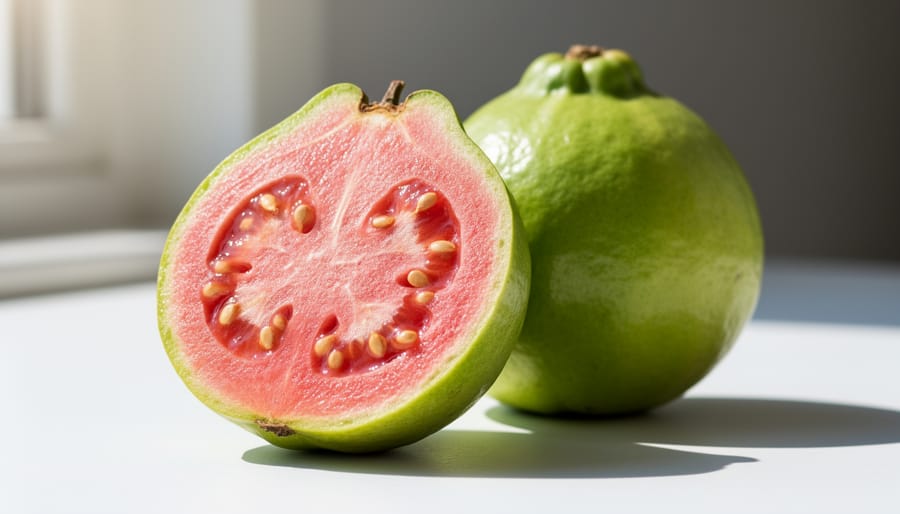
One medium guava (about 55 grams) delivers 37 calories, 1.4 grams of protein, 7.9 grams of carbohydrates, and 3 grams of fiber. This tropical fruit stands out nutritionally because it provides 140% of your daily vitamin C needs in a single serving, more than double what you’d get from an orange of the same size.
The numbers tell an impressive story. Each guava contains 229 milligrams of potassium (5% daily value), 20 milligrams of magnesium, and significant amounts of folate and vitamin A. The bright pink or white flesh holds powerful antioxidants called carotenoids, particularly lycopene, which gives pink varieties their color and provides the same compound found in tomatoes.
What makes guava particularly valuable for health-conscious eaters is its low glycemic impact despite its natural sweetness. The high fiber content slows sugar absorption, making it a smart choice for blood sugar management. Dr. Maria Santos, a registered dietitian based in California, notes that “guava’s fiber-to-sugar ratio is one of the most favorable among commonly eaten fruits, which helps explain why it’s become popular in weight management programs.”
This guide breaks down everything you need to know about guava’s nutritional profile. You’ll find verified data on calories, macronutrients, vitamins, and minerals, plus practical information on how these nutrients translate to real health benefits and how to incorporate this fruit into your daily eating plan.
The Complete Nutritional Breakdown of Guava
One cup of raw guava, about 165 grams or roughly two whole fruits, delivers a nutrient profile that rivals many so-called superfoods. Here’s what you’re actually getting when you slice into this tropical fruit.
| Nutrient | Amount per Cup (165g) | Daily Value Context |
|---|---|---|
| Calories | 112 | Modest energy load |
| Carbohydrates | 23.6g | Includes 8.9g fiber, 14.7g natural sugar |
| Protein | 4.2g | Unusually high for fruit |
| Fiber | 8.9g | About 30% of recommended daily intake |
| Vitamin C | Significant amount | Exceeds citrus fruits |
| Vitamin A | Present | Supports vision and immune health |
The calorie count sits at 112 per cup, making guava a genuinely low-calorie choice that won’t derail weight management goals. Compare this to the same volume of grapes (about 104 calories) or mango (about 99 calories), and you’ll see guava fits comfortably in the moderate range while delivering substantially more nutrients per calorie.
What really sets guava apart is the combination of 4.2 grams of protein and 8.9 grams of fiber in a single serving. Most fruits barely register protein, typically offering less than a gram. Guava’s protein content helps with satiety and tissue repair, while that fiber, nearly a third of what adults need daily, supports digestive health and steady blood sugar levels. The 14.7 grams of natural sugar come packaged with all that fiber, which slows absorption and prevents the spike you’d get from refined sweets.
The vitamin and mineral content rounds out guava’s appeal. Its vitamin C concentration surpasses oranges and grapefruits, supporting everything from collagen production to immune defense. Vitamin A contributes to eye health and cellular function, while potassium helps regulate blood pressure and muscle contractions. This nutrient density means you’re getting genuine nutritional value, not just empty calories or sugar in fruit form.
Why Guava’s Fiber Content Stands Out
At 8.9 grams per cup, guava delivers more fiber than most fruits you’ll find at the grocery store. That’s roughly a third of the daily recommended intake for adults packed into a single serving, significantly more than an apple, orange, or banana of similar size.
This fiber content comes from both soluble and insoluble types, which work together in your digestive system. Soluble fiber dissolves in water and forms a gel-like substance that slows digestion, helping you feel fuller longer and moderating how quickly sugar enters your bloodstream. Insoluble fiber adds bulk to stool and keeps things moving through your intestinal tract, supporting regular bowel movements.
The blood sugar impact is particularly noteworthy. When you eat guava’s natural sugars alongside all that fiber, the fiber acts as a buffer. Your body absorbs the sugar more gradually, avoiding the sharp spikes and crashes that can follow low-fiber sweet snacks. For anyone managing their glucose levels or trying to maintain steady energy throughout the day, this combination matters.
The satiety factor shouldn’t be overlooked either. High-fiber foods trigger fullness signals in your gut, which means guava can help control appetite without adding many calories. At just 112 calories per cup, you’re getting substantial nutritional value while supporting portion control naturally.
Many nutritionists emphasize that most people fall short of their daily fiber needs, making naturally fiber-rich whole foods like guava valuable additions to a balanced diet. Unlike fiber supplements, guava packages this nutrient alongside vitamins, minerals, and antioxidants, a combination your body knows how to process efficiently.
Vitamin C: Guava’s Secret Weapon
One cup of guava delivers a remarkable dose of vitamin C, though the exact amount varies by variety and ripeness, guava consistently outranks many popular citrus fruits in this crucial nutrient. While oranges get most of the credit for vitamin C, guava often contains significantly more per serving, making it an underutilized option for those seeking natural immune support.
This exceptional vitamin C content translates into real health benefits. Your body uses vitamin C to support immune cell function, helping white blood cells work more effectively against pathogens. During cold season or times of stress, incorporating vitamin C-rich foods like guava can help maintain your body’s first line of defense.
Beyond immunity, vitamin C plays a critical role in collagen production, the protein that keeps your skin firm and resilient. Eating guava regularly supports skin repair and can help minimize the visible effects of sun damage and aging. The antioxidant properties of vitamin C also protect your cells from oxidative stress, which accumulates from everything from pollution to normal metabolism.
For practical application, eating fresh guava in the morning gives your body vitamin C when it can best use it, your immune system is most active during waking hours. Pairing guava with iron-rich foods like spinach or lentils is particularly smart, since vitamin C dramatically improves iron absorption. A single serving of guava can meet or exceed your daily vitamin C needs, making it an efficient choice for anyone prioritizing nutrient density without supplements.
Understanding Guava’s Natural Sugar and Protein Balance
The 14.7 grams of natural sugar in one cup of guava might initially raise eyebrows, but context matters. Unlike added sugars in processed foods, this naturally occurring fructose comes packaged with 8.9 grams of fiber, which slows sugar absorption and prevents the blood glucose spikes associated with refined sweets. For most people, guava’s sugar content isn’t a concern because the fiber acts as a built-in regulator, making it a smart choice even for those monitoring their carbohydrate intake.
What truly sets guava apart is its 4.2 grams of protein per cup. Most fruits hover around 1 gram or less, making guava an unexpected source of plant-based protein. While it won’t replace your primary protein sources, this amount contributes meaningfully to your daily intake, particularly when combined with other plant foods throughout the day.
For weight management specifically, guava’s nutritional balance creates a favorable scenario. The high fiber and protein combination promotes satiety, helping you feel fuller longer on just 112 calories per cup. This makes guava a strategic addition for anyone following weight loss tips that emphasize nutrient density over calorie restriction.
The takeaway: guava’s natural sugar shouldn’t deter you. The fruit’s overall nutrient package, particularly that fiber-to-sugar ratio, means your body processes it slowly and steadily. Whether you’re managing blood sugar, seeking better satiety, or simply looking for a nutritious snack that doesn’t require trade-offs, guava’s macronutrient balance delivers more benefits than concerns.
How to Work Guava Into Your Daily Routine
Adding guava to your routine is straightforward once you know what to look for. Choose firm, fragrant fruit that gives slightly when pressed, the skin should show light yellow or yellow-green coloring for peak ripeness. You can eat the entire fruit, including the seeds and skin, which contain valuable nutrients and fiber that contribute to the 8.9 grams per cup.
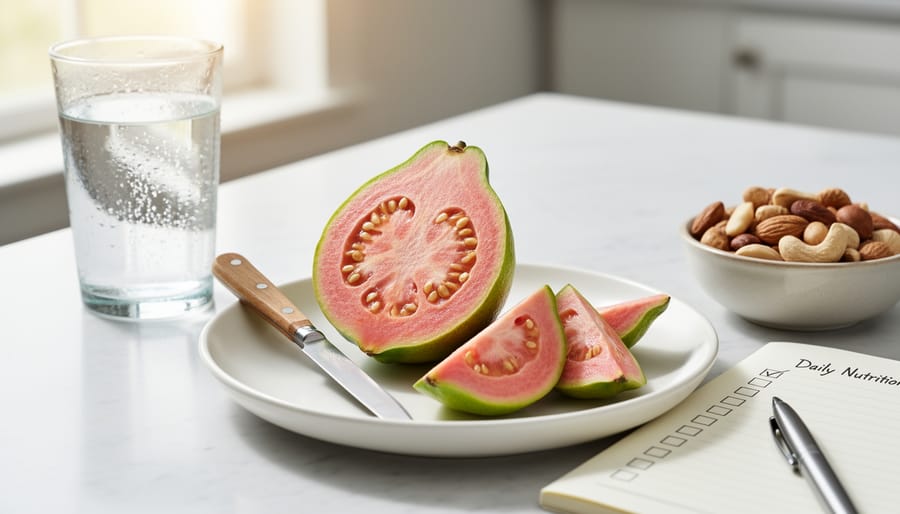
The simplest approach is slicing guava into bite-sized pieces for a mid-morning or afternoon snack. The 4.2 grams of protein per cup makes it more filling than most fruits, helping you stay satisfied between meals. Try pairing fresh guava with a handful of nuts or a small portion of cheese to create a balanced snack that stabilizes blood sugar while delivering vitamin C and potassium.
For breakfast, dice guava over plain yogurt or cottage cheese. The natural sweetness means you won’t need added sugar, and the combination provides both immediate energy and sustained fullness. Guava also pairs well with tropical fruits like pineapple and mango in fruit salads, though mixing with less sweet options like berries keeps the overall sugar content in check.
When you need to relieve stress during a busy day, the act of slicing and mindfully eating fresh guava can serve as a calming ritual while nourishing your body. Avoid cooking guava for extended periods, which degrades vitamin C, brief sautéing or adding to smoothies at the end of blending preserves most nutrients.
Who Benefits Most from Adding Guava to Their Diet
Guava’s nutritional profile makes it particularly valuable for people managing specific health concerns or pursuing targeted wellness goals. If you struggle with digestive issues, that 8.9 grams of fiber per cup supports regular bowel movements and feeds beneficial gut bacteria. Those focused on immune resilience benefit from the exceptional vitamin C content, which is far higher than what you’d get from buying supplements in many cases.
People working on blood sugar management appreciate how the high fiber content slows sugar absorption, making guava a smarter choice than many other sweet fruits despite its 14.7 grams of natural sugar. The 112 calories per cup also appeals to anyone tracking intake for weight management while still wanting satisfying, nutrient-rich food.
A few considerations matter here. While rare, some individuals experience food intolerance to tropical fruits, so start with a small serving if you’ve never eaten guava. Those on blood thinners should discuss guava consumption with their healthcare provider, as vitamin K in the leaves (though not the fruit itself) can interfere with certain medications. Pregnant women and people with digestive conditions like IBS might want to moderate portions since the high fiber could cause temporary bloating until your system adjusts.

Understanding guava nutrition facts gives you the foundation to make smarter decisions about the foods you choose. The research is clear: a single cup of this tropical fruit delivers 8.9 grams of fiber, exceptional vitamin C levels that surpass most citrus options, and a balanced macronutrient profile that includes 4.2 grams of protein, all for just 112 calories. These aren’t abstract numbers. They translate into tangible benefits for your immune system, digestive health, and blood sugar management.
What makes guava stand out in 2026 isn’t hype or trend-chasing. It’s the documented nutritional density that holds up against more common fruit choices. You now have the verified facts to assess whether this fruit aligns with your specific health goals, whether that’s increasing fiber intake, supporting immune function, or finding nutrient-rich options that don’t derail calorie targets.
The broader lesson? Nutrition facts matter, but only when you understand what they mean for you. Armed with this knowledge about guava, you’re equipped to incorporate it thoughtfully into your routine, or make an informed choice to prioritize other options that better suit your needs.